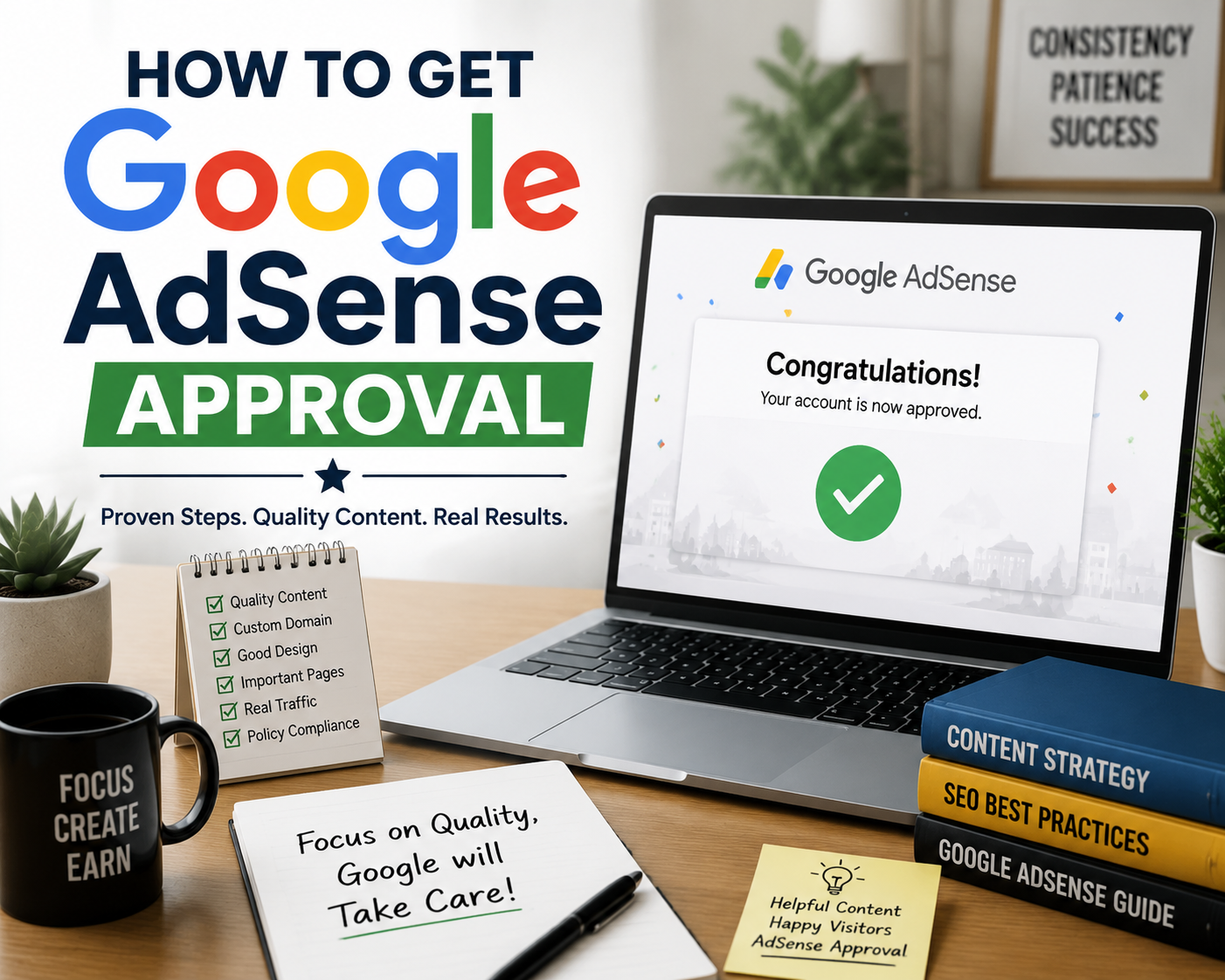
Getting approved for Google AdSense is one of the biggest milestones for many bloggers and website owners. After spending time building a website and publishing content, the next step is often finding a reliable way to monetize that traffic.
Unfortunately, many beginners apply for AdSense too early and receive rejection emails without fully understanding what went wrong.
The good news is that Google AdSense approval is not as complicated as many people think. If your website provides value to users, follows Google’s policies, and demonstrates quality, your chances of approval increase significantly.
In this guide, you’ll learn exactly how to get Google AdSense approval in 2026, common mistakes to avoid, and practical steps that can improve your chances of success.
What Is Google AdSense?
Google AdSense is an advertising program that allows website owners to earn money by displaying ads on their websites.
When visitors view or click on ads displayed on your website, you earn revenue based on various factors such as:
- Traffic volume
- Visitor location
- Niche
- Advertiser demand
- Ad engagement
AdSense remains one of the most popular monetization methods for bloggers because it is relatively easy to implement and requires no direct advertiser relationships.
Why Do So Many AdSense Applications Get Rejected?
Many website owners assume that having a website is enough to qualify for AdSense.
In reality, Google carefully reviews websites before granting approval.
Common reasons for rejection include:
- Thin content
- Poor website structure
- Lack of essential pages
- Copyright violations
- Low-quality user experience
- Policy violations
- Insufficient original content
- Incomplete website setup
The key is to build a website that looks trustworthy, useful, and professional before applying.
Step 1: Create High-Quality Original Content
Content is the most important factor in the AdSense approval process.
Google wants to approve websites that provide genuine value to users.
Before applying, publish original articles that:
- Solve real problems
- Answer common questions
- Provide detailed explanations
- Offer unique insights
- Demonstrate expertise
Avoid:
- AI-generated content without human editing
- Copied content
- Rewritten articles from other websites
- Thin articles with little value
A strong content foundation shows Google that your website deserves to be monetized.
How Many Articles Do You Need Before Applying?
There is no official number required by Google.
However, a practical recommendation is to have at least:
- 15 to 30 quality articles
- Well-structured content
- Consistent formatting
- Helpful information
For example, if you run a blogging website, your content could cover topics such as:
- How to Start a Blog in 2026
- Blogging for Beginners
- SEO Basics
- WordPress Tutorials
- Website Monetization
Having content clusters around a specific niche helps establish topical authority.
Step 2: Choose a Clear Niche
Google generally prefers websites with a clear purpose.
A website that focuses on a specific niche often performs better than a website covering unrelated topics.
Examples of good niches include:
- Blogging
- Technology
- Education
- Personal Finance
- Health and Fitness
- Digital Marketing
- Travel
A focused niche helps Google understand your website and improves your long-term SEO strategy.
Step 3: Create Essential Website Pages
One of the most common reasons for AdSense rejection is missing legal and trust pages.
Before applying, make sure your website includes:
About Us Page
Your About Us page should explain:
- Who you are
- What your website is about
- Why visitors should trust your content
Contact Us Page
A Contact Us page shows Google that visitors can reach you if needed.
Privacy Policy
This page explains how user data is collected and handled.
Disclaimer
A disclaimer helps clarify the purpose of your content and protects your website legally.
Terms and Conditions
This page outlines the rules governing website usage.
These pages help establish trust and professionalism.
Step 4: Use a Professional Website Design
Your website does not need an expensive design to get approved.
However, it should look clean and professional.
A good website design should have:
- Easy navigation
- Mobile responsiveness
- Readable fonts
- Fast loading speed
- Clear menu structure
Visitors should be able to find information without confusion.
A cluttered website filled with pop-ups and distractions can negatively impact user experience.
Step 5: Ensure Your Website Is Mobile-Friendly
A significant percentage of internet users access websites through mobile devices.
Google prioritizes mobile usability because it directly affects user experience.
Before applying for AdSense:
- Test your website on mobile devices
- Ensure text is readable
- Verify menus function properly
- Check image responsiveness
A mobile-friendly website creates a better experience for visitors and reviewers alike.
Step 6: Improve Website Speed
Website speed is important for both SEO and AdSense approval.
Slow websites often result in:
- Higher bounce rates
- Poor user experience
- Reduced engagement
You can improve website speed by:
- Compressing images
- Using caching plugins
- Choosing reliable hosting
- Removing unnecessary plugins
- Optimizing website code
If you’re new to optimization, you may find our guide on How to Start a Blog in 2026 useful because it explains how to build a solid blogging foundation from the beginning.
Step 7: Avoid Copyrighted Content
Google takes intellectual property rights seriously.
Do not publish:
- Copied articles
- Pirated software
- Copyrighted images without permission
- Unauthorized videos
- Duplicate content
Instead:
- Create original content
- Use royalty-free images
- Credit sources where appropriate
Originality significantly improves your chances of approval.
Step 8: Set Up Important Technical SEO Elements
A properly configured website signals professionalism and trustworthiness.
Before applying, ensure that you have:
XML Sitemap
A sitemap helps search engines discover your content.
Google Search Console
Connect your website to Google Search Console and submit your sitemap.
SSL Certificate
Your website should use HTTPS instead of HTTP.
Proper Navigation
Visitors should easily access categories, pages, and blog posts.
Technical SEO improvements not only help with AdSense approval but also support future organic traffic growth.
Step 9: Remove Low-Quality Content
Quality matters more than quantity.
Before submitting your application, review your website carefully.
Remove or improve:
- Thin articles
- Duplicate content
- Incomplete posts
- Poorly written content
Every page on your website should contribute value to the user experience.
Step 10: Verify Website Ownership
When applying for AdSense, Google will ask you to verify ownership of your website.
Follow the verification instructions carefully.
This usually involves:
- Creating an AdSense account
- Adding the AdSense code to your website
- Waiting for Google to review the site
Make sure the code is properly installed before requesting a review.
How Long Does AdSense Approval Take?
Approval times vary.
Some websites receive approval within a few days, while others may take several weeks.
The review period depends on factors such as:
- Website quality
- Content volume
- Policy compliance
- Manual review processes
Patience is important during this stage.
Common AdSense Approval Mistakes to Avoid
Many bloggers unintentionally reduce their approval chances by making avoidable mistakes.
Some of the most common include:
1. Applying Too Early
Many new website owners apply with only a few articles.
Building a stronger content foundation usually produces better results.
2. Publishing Low-Quality Content
Poor content quality is one of the fastest ways to receive a rejection.
3. Ignoring Essential Pages
Missing trust pages can make your website appear incomplete.
4. Using Copyrighted Materials
Unauthorized content can lead to immediate rejection.
5. Poor Navigation
A confusing website structure creates a poor user experience.
6. Violating AdSense Policies
Always review Google’s current program policies before applying.
What Should You Do If AdSense Rejects Your Website?
A rejection is not the end of the journey.
Many successful publishers were rejected before eventually gaining approval.
If your application is rejected:
- Carefully review the rejection reason.
- Improve the identified issues.
- Add more high-quality content.
- Strengthen user experience.
- Reapply after making meaningful improvements.
Treat the rejection as feedback rather than failure.
Conclusion
Getting Google AdSense approval in 2026 requires more than simply creating a website and submitting an application. Google wants to see a useful, trustworthy, and user-focused website that delivers genuine value.
Focus on publishing quality content, creating essential pages, improving website structure, and following Google’s policies. If you build your website with users in mind, AdSense approval becomes much more achievable.
Remember that AdSense is only one part of a successful blogging journey. Building authority, attracting organic traffic, and consistently helping your audience will create far greater long-term opportunities.
Frequently Asked Questions (FAQs)
1. How many blog posts do I need for AdSense approval?
There is no official requirement from Google. However, having 15 to 30 high-quality, original articles can significantly improve your chances of approval.
2. Can a new website get AdSense approval?
Yes. A new website can get approved if it contains quality content, essential pages, a professional design, and complies with AdSense policies.
3. How long does AdSense approval take?
Approval can take anywhere from a few days to several weeks depending on the website review process and overall site quality.
4. Does website traffic affect AdSense approval?
Google does not specify a minimum traffic requirement for approval. Quality content and policy compliance are generally more important than traffic volume.
5. Can I apply for AdSense with AI-generated content?
Google focuses on content quality rather than how content is created. However, content should be original, accurate, helpful, and thoroughly reviewed by humans before publication.